
| Care | Recommendation |
|---|---|
| Light | Bright, indirect |
| Water | When top 1–2″ of soil dries |
| Soil | Loose, well-draining aroid mix |
| Humidity | Average to high; 50%+ preferred |
| Temperature | 65–85°F |
| Fertilizer | Monthly during active growth |
| Difficulty | Easy to moderate |
| Growth | Upright, spreading tropical foliage |
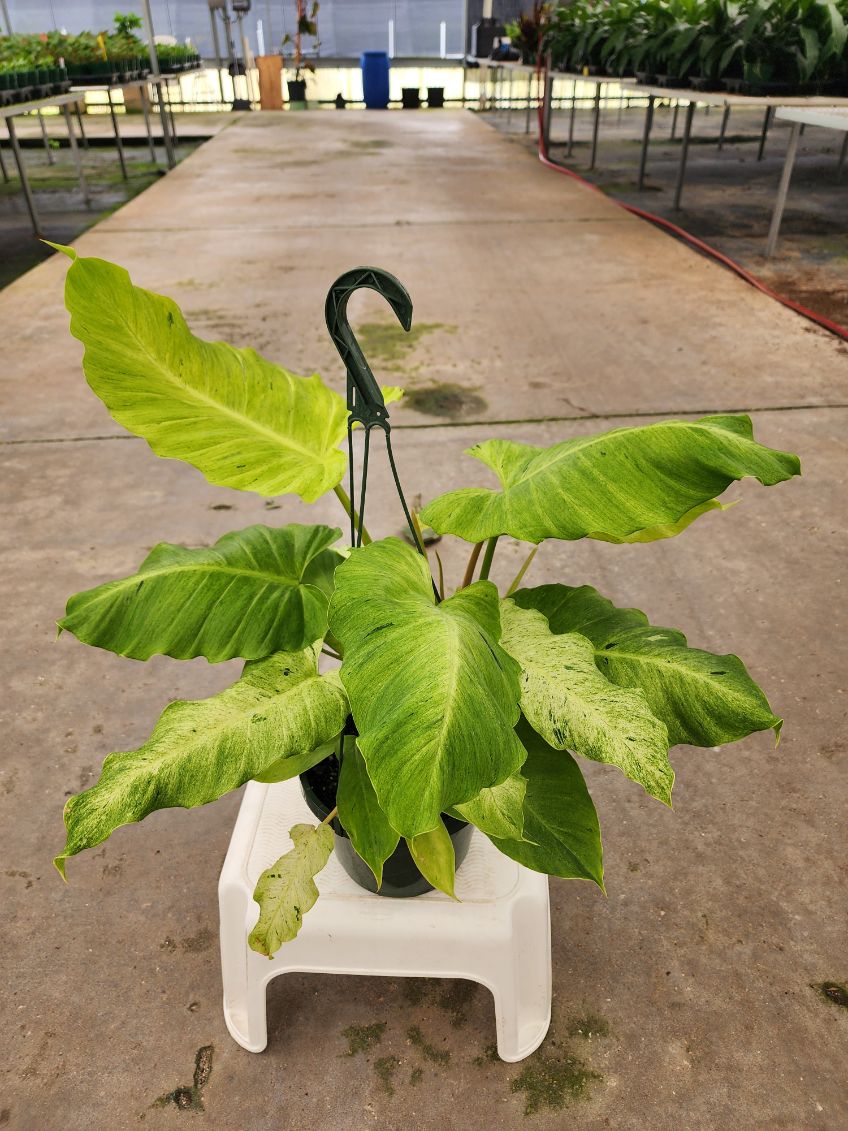
The Philodendron Snowdrift is a striking tropical houseplant known for its large, elongated leaves and unusual coloring. New growth can emerge creamy white or pale yellow with green speckling, gradually becoming greener as the leaves mature. It’s relatively easy to care for once you get its light and watering routine right.
Light
Give your Snowdrift bright, indirect light. Plenty of filtered light helps encourage attractive coloring and healthy growth.
A little gentle morning sun is usually fine, but avoid prolonged, intense afternoon sun, which can scorch the lighter portions of the leaves. In lower light, the plant can survive, but growth may slow and new leaves may emerge greener.
Water
Water when the top 1–2 inches of soil feel dry. Water thoroughly until excess water drains from the bottom of the pot, then empty any standing water from the saucer.
Snowdrifts prefer slightly moist soil but do not like staying soggy. Constantly wet soil can lead to root rot. Watering frequency will naturally decrease during cooler months when the plant is growing more slowly.
Quick tip: Check the soil rather than watering on a fixed schedule.
Soil
Use a loose, well-draining potting mix that holds some moisture without becoming compacted. A tropical houseplant or aroid mix works especially well.
A simple mixture can include:
- Quality indoor potting soil
- Orchid bark
- Perlite or pumice
Always use a container with drainage holes.
Temperature & Humidity
Philodendron Snowdrift appreciates warm, humid conditions.
Temperature: About 65–85°F is ideal. Protect it from cold drafts and temperatures below about 55–60°F.
Humidity: Average household humidity can work, but 50% humidity or higher generally encourages healthier foliage. A humidifier can help in especially dry homes.
Fertilizer
During spring and summer, feed approximately once a month with a balanced liquid houseplant fertilizer, diluted according to its directions.
Reduce or stop fertilizing during fall and winter if growth slows. Avoid over fertilizing, which can cause brown leaf tips or salt buildup in the soil.
Growth & Re-potting
Snowdrift can become a fairly substantial houseplant, producing increasingly large leaves as it matures. Give it room to grow and rotate the pot occasionally to encourage even growth.
Re-pot when you notice roots becoming crowded, growing heavily through the drainage holes, or the soil drying considerably faster than it used to. Move up only one pot size at a time; an oversized container can hold too much moisture around the roots.
Pruning & Maintenance
Very little pruning is necessary. Remove yellow, damaged, or dying leaves with clean pruning shears.
Wipe the leaves occasionally with a soft, damp cloth. Keeping the foliage clean not only makes the plant look better but also makes it easier to spot pests early.
Common Problems
Yellow leaves: Often caused by over watering or poor drainage.
Brown, crispy edges: May indicate underwatering, low humidity, excessive fertilizer, or very dry conditions.
Faded or greener new growth: The plant may need brighter indirect light.
Brown/scorched patches: Often associated with too much direct sunlight.
Watch for common houseplant pests such as spider mites, mealybugs, scale, and thrips, particularly around new growth and the undersides of leaves.
Good to know: Like other philodendrons, Snowdrift contains calcium oxalate crystals and should not be eaten by people or pets. Keep it out of reach of curious children and animals.
Leave a Reply