
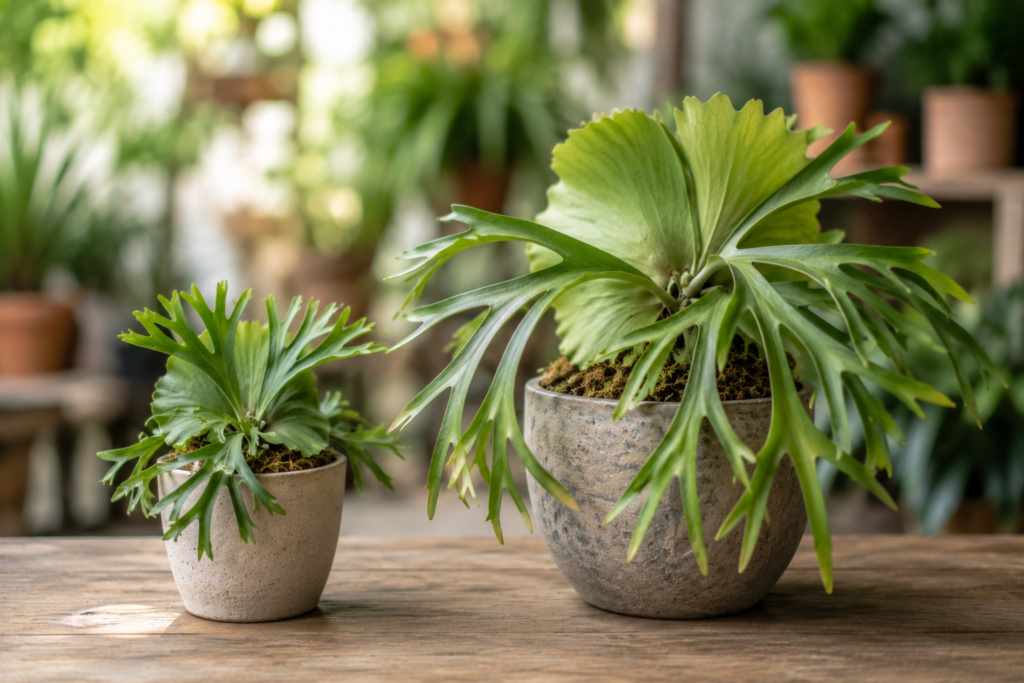
With their dramatic antler-shaped fronds and unique growth habit, staghorn ferns are one of the most eye-catching plants you can add to your home. Unlike traditional ferns, these tropical epiphytes naturally grow attached to trees rather than in soil, making them perfect for mounting on wood, displaying in hanging baskets, or growing in decorative planters.
We have Staghorn ferns available in 6″ and 8″ hanging baskets.
Although they have a reputation for being challenging, staghorn ferns are surprisingly easy to care for once you understand how they grow.
What Is a Staghorn Fern?
Staghorn ferns (Platycerium species) are tropical epiphytes, meaning they naturally grow on trees instead of in the ground. They absorb moisture and nutrients through their roots and shield fronds, while their distinctive antler-like fronds collect sunlight for photosynthesis.
Over time, mature plants develop two different types of fronds:
- Shield fronds are the round, flat fronds at the base that protect the roots and help collect organic matter.
- Fertile fronds are the long, branching fronds that resemble deer antlers and give the plant its signature appearance.
Do not remove the brown shield fronds—they help protect and nourish the plant.
Light Requirements
Staghorn ferns thrive in bright, indirect light.
Ideal locations include:
- Near an east-facing window
- A few feet back from a south- or west-facing window
- Under a sheer curtain that filters strong afternoon sun
Too much direct sunlight can scorch the fronds, while too little light may result in slow growth and smaller fronds.
Watering
Watering is often the trickiest part of caring for a staghorn fern.
Allow the growing medium or mounting moss to dry slightly between waterings.
Mounted Plants
- Soak the entire mount in room-temperature water for 10–20 minutes.
- Allow excess water to drain completely before rehanging.
Potted Plants
- Water thoroughly until excess drains from the container.
- Allow the top inch of growing medium to dry before watering again.
During warmer months, watering may be needed once or twice a week. In winter, reduce watering as growth slows.
Avoid keeping the roots constantly wet, as this can lead to rot.
Humidity
As tropical plants, staghorn ferns appreciate moderate to high humidity.
Aim for humidity levels of 50–70% whenever possible.
You can increase humidity by:
- Using a humidifier
- Grouping plants together
- Placing the plant in naturally humid rooms such as bathrooms with bright light
Good air circulation is just as important as humidity to help prevent fungal issues.
Temperature
Staghorn ferns prefer temperatures between 60–80°F.
Protect them from:
- Frost
- Temperatures below 50°F
- Cold drafts
- Heating vents that produce dry air
Most varieties make excellent year-round houseplants.
Soil and Mounting Medium
Since staghorn ferns naturally grow on trees, they require excellent drainage.
Common growing options include:
- Long-fiber sphagnum moss
- Orchid bark mixes
- Mounted on cedar, cork bark, or hardwood plaques
- Hanging wire baskets filled with sphagnum moss
Avoid dense potting soils that remain wet for long periods.
Fertilizing
Feed lightly during the growing season.
Apply a balanced liquid houseplant fertilizer diluted to one-quarter strength every 4–6 weeks during spring and summer.
Reduce or stop fertilizing during fall and winter when growth naturally slows.
Overfertilizing can damage the roots and fronds.
Repotting and Mounting
Staghorn ferns grow slowly and rarely require frequent repotting.
Repot or remount when:
- The plant outgrows its support
- Roots become crowded
- The mounting material begins to break down
Large specimens are often divided into smaller plants during repotting.
Common Problems
Brown Shield Fronds
This is completely normal.
Shield fronds naturally turn brown as they mature and should remain attached to protect the plant.
Brown Tips
Often caused by:
- Low humidity
- Underwatering
- Salt buildup from fertilizer
Yellowing Fronds
Usually indicate:
- Overwatering
- Poor drainage
- Root rot
Black Spots
Small dark patches on the undersides of fertile fronds are often spores, not disease. These are part of the fern’s natural reproduction process.
Pet Friendly
Good news for pet owners!
Staghorn ferns are considered non-toxic to both cats and dogs, making them an excellent choice for households with curious pets.
Quick Care Summary
| Care Factor | Recommendation |
|---|---|
| Light | Bright, indirect light |
| Water | Allow moss or growing medium to dry slightly between waterings |
| Humidity | 50–70% preferred |
| Temperature | 60–80°F |
| Soil | Sphagnum moss, orchid bark, or mounted on wood |
| Fertilizer | Quarter-strength liquid fertilizer every 4–6 weeks in spring and summer |
| Repotting | Every few years or when outgrowing its mount |
| Pet Safe | Yes |
Final Thoughts
Staghorn ferns bring a unique architectural element to any indoor plant collection. Their sculptural fronds, ability to grow mounted on walls, and relatively simple care requirements make them a favorite among both beginner and experienced plant enthusiasts. With bright filtered light, moderate humidity, and careful watering, your staghorn fern can thrive for decades and become an impressive living centerpiece.
If you have any questions, feel free to call us at (352) 735-8350. You can also view our inventory list online.