
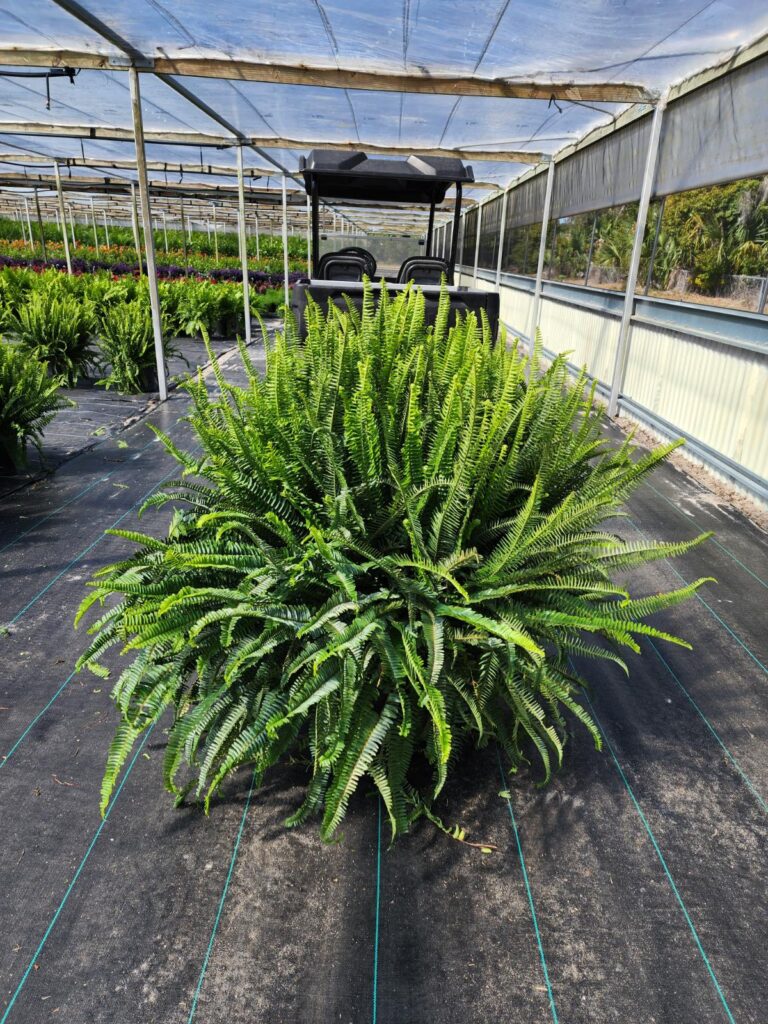
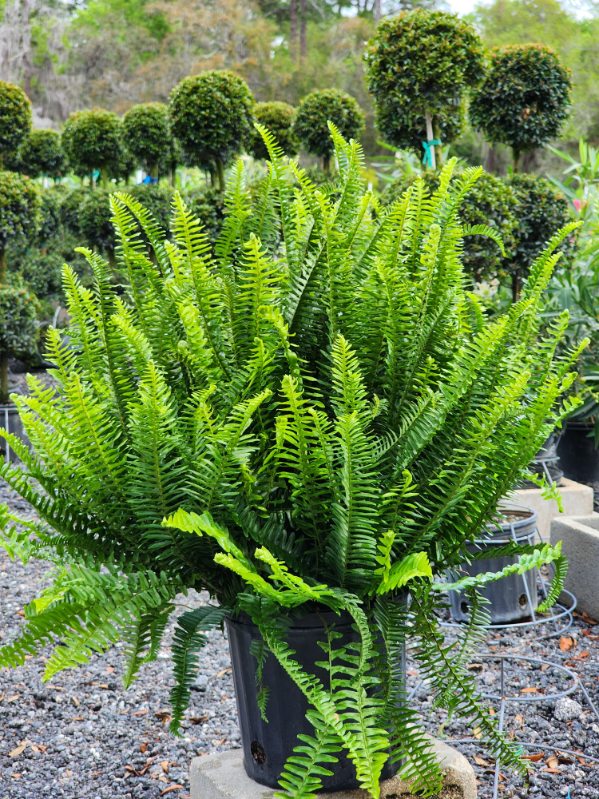
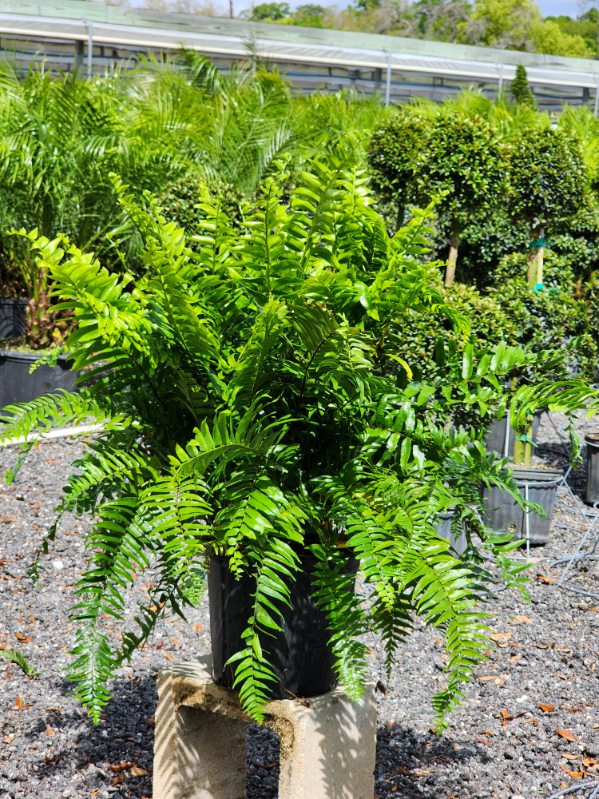
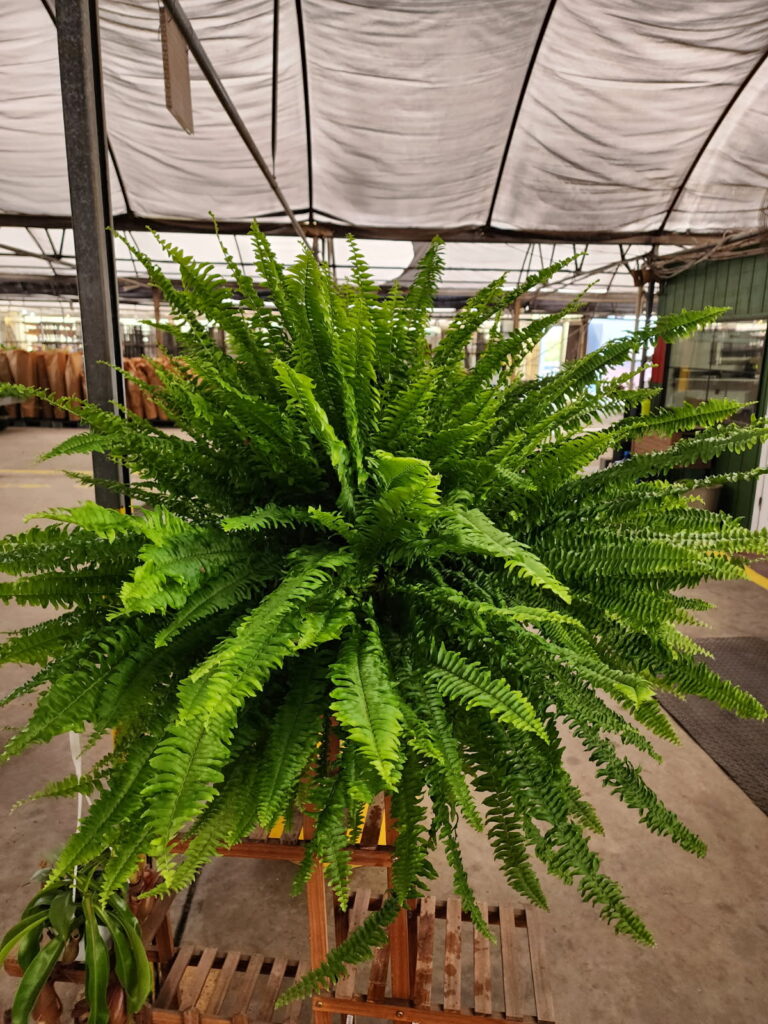
Ferns are a go-to choice for adding rich, tropical texture to porches, patios, and shaded garden spaces. Two of the most popular varieties we carry are Nephrolepis obliterata (Kimberly Queen fern) and Nephrolepis biserrata (Macho fern). While both are relatively easy to care for, they do have slightly different growth habits and preferences.
This guide will help you successfully grow both types. For any questions, or to purchase, please call us at (352) 735-8350.
Key Differences Between Kimberly Queen and Macho Ferns
Kimberly Queen Fern
- Upright, structured growth
- More tolerant of sun and wind
- Great for containers and entryways
Macho Fern
- Larger, more dramatic, arching fronds
- Prefers more shade and space
- Ideal for hanging baskets or landscape use
Light Requirements for Ferns
Both ferns prefer indirect light, but there are some differences:
- Kimberly Queen fern: Can tolerate partial sun and brighter conditions
- Macho fern: Prefers shade to partial shade and protection from direct sun
Too much direct sunlight can cause fronds to burn or fade.
Temperature and Humidity Needs
Ferns thrive in warm, humid environments.
- Ideal temperature range: 60 to 85 degrees Fahrenheit
- Sensitive to frost and cold temperatures
Both ferns can be grown outdoors during the warmer months but should be protected or brought indoors when temperatures drop.
Humidity is important for keeping fronds lush and green. Dry air can lead to browning or crispy edges.
Watering Kimberly Queen and Macho Ferns
Consistent moisture is essential for healthy ferns.
- Keep soil evenly moist but not soggy
- Water when the top inch of soil begins to feel dry
- Avoid letting the soil completely dry out
Macho ferns tend to need slightly more water due to their larger size and leaf mass.
Best Soil for Ferns
Use a rich, well-draining potting mix that retains moisture without becoming compacted.
Ideal mix includes:
- Potting soil
- Compost or peat moss
- Perlite for drainage
Soil pH should be slightly acidic to neutral (around 6.0 to 7.0).
Fertilizing Ferns
Ferns are light feeders compared to flowering plants.
- Use a balanced, diluted fertilizer
- Feed every 4 to 6 weeks during the growing season
- Avoid over-fertilizing, which can damage roots and fronds
Pruning and Maintenance
Regular maintenance helps keep ferns full and attractive.
- Remove dead or yellowing fronds at the base
- Trim back damaged growth as needed
- Clean out debris to prevent pests and disease
Kimberly Queen ferns maintain a neater shape, while Macho ferns may need more occasional trimming due to their size.
Common Problems and Pests
Ferns are generally low-maintenance but can experience:
- Browning tips: Often caused by low humidity or inconsistent watering
- Yellowing fronds: Can indicate overwatering or poor drainage
- Pests: Spider mites, mealybugs, and scale
Treat pests with neem oil or insecticidal soap and adjust care conditions as needed.
Growing Ferns in Containers and Hanging Baskets
Both Kimberly Queen and Macho ferns perform well in containers.
- Use pots with good drainage
- Water more frequently in hanging baskets, as they dry out faster
- Ideal for porches, patios, and shaded outdoor living spaces
Macho ferns are especially popular in large hanging baskets due to their dramatic, cascading growth.
Winter Care
In climates with occasional frost, these ferns need protection.
- Bring indoors before temperatures drop below 40 degrees
- Place in a bright area with indirect light
- Reduce watering slightly during winter months
Alternatively, treat them as annuals if overwintering space is limited.
Final Thoughts
Kimberly Queen and Macho ferns are excellent choices for adding lush greenery and texture to your space. With proper watering, humidity, and light conditions, both varieties can thrive and provide season-long beauty.
Whether you prefer the upright elegance of Kimberly Queen ferns or the bold, tropical look of Macho ferns, these plants are a reliable and rewarding addition to your garden or home.
Leave a Reply