
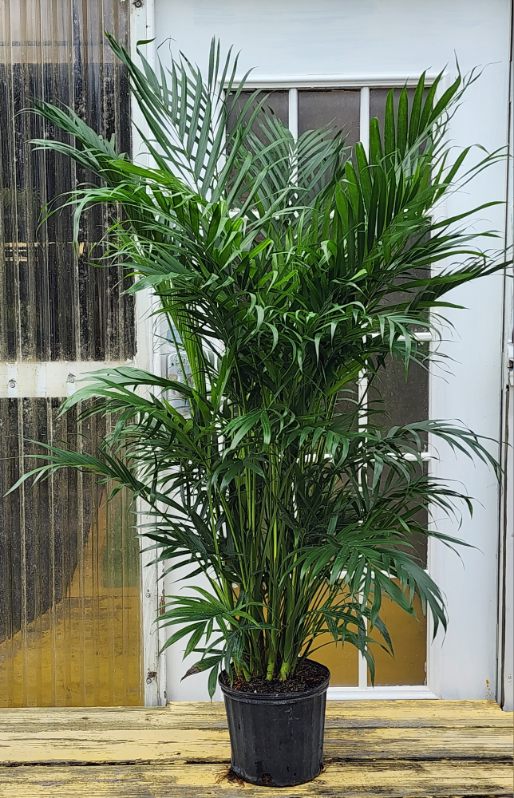
The Cat Palm (Chamaedorea cataractarum) is a lush, tropical houseplant loved for its full, feathery fronds and soft, elegant appearance.
Unlike many palms that develop a trunk, this variety stays bushy and compact, making it perfect for bright indoor corners, decorative planters, and creating a tropical vibe in any space.
Although it’s more demanding than a snake plant or pothos, proper care will keep your Cat Palm looking vibrant and full.

Light Requirements
Cat Palms thrive with plenty of bright, indirect light.
- Best in east- or north-facing windows.
- Filtered light is ideal—avoid harsh midday sun, which can scorch the fronds.
- They tolerate lower light but may become thin or leggy over time.
If the fronds start yellowing or growth slows dramatically, your palm may need more consistent light.
Watering
Cat Palms prefer evenly moist soil but dislike sitting in water.
- Water when the top 1–2 inches of soil feel dry.
- Keep the soil moist but never soggy.
- Reduce watering slightly in winter.
- Always use pots with drainage holes.
Crispy leaf tips often signal underwatering, low humidity, or long dry periods.
Humidity Needs
As true tropical plants, Cat Palms LOVE humidity.
- Ideal humidity: 50–70%
- Use a humidifier, pebble tray, or place the plant near other moisture-loving plants.
- Keep away from heating vents, drafts, and dry air.
High humidity helps maintain full, lush fronds and prevents browning.
Temperature
Maintain warm, stable temperatures.
- Ideal range: 65–80°F
- Never allow temps below 55°F
- Keep away from cold drafts or sudden temperature drops.
Soil & Potting
Cat Palms do best in a rich, well-draining soil mix.
- Use high-quality potting soil blended with perlite or sand to improve drainage.
- Repot every 1–2 years, or when roots begin filling the pot.
- Choose a pot with multiple drainage holes—this palm dislikes wet feet.
Fertilizing
Feed lightly during the growing season.
- Use a balanced, slow-release or diluted liquid fertilizer once per month in spring and summer.
- Avoid feeding in fall and winter.
Over-fertilizing can cause leaf burn, so keep it gentle.
Common Issues
- Yellowing Leaves. Often caused by overwatering or too little light.
- Brown Tips. Common and usually related to low humidity, underwatering, or mineral-heavy tap water.
- Drooping Fronds. Typically underwatering or very dry air.
- Pests. Watch for spider mites, mealybugs, or scale—especially in low humidity conditions. Treat with neem oil or insecticidal soap if needed.
Why Cat Palms Make Great Houseplants
- Adds instant tropical greenery
- Safe and non-toxic to pets
- Naturally purifies indoor air
- Perfect for creating lush, decorative indoor displays
- A great option for bright living rooms or sunlit corners