
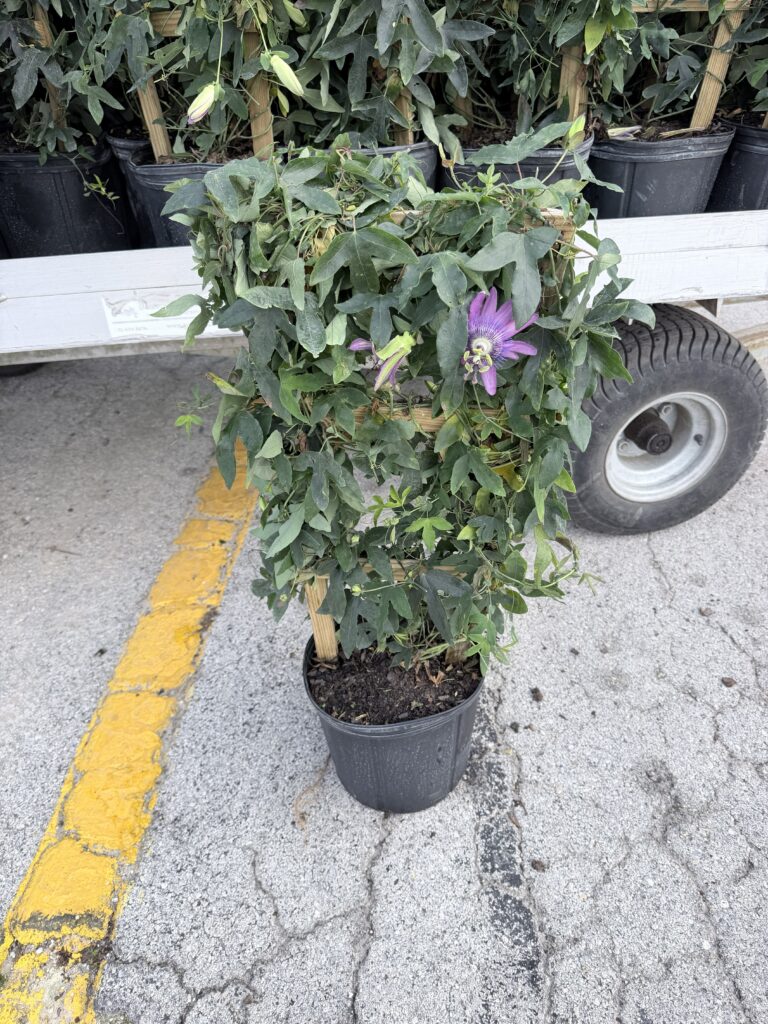
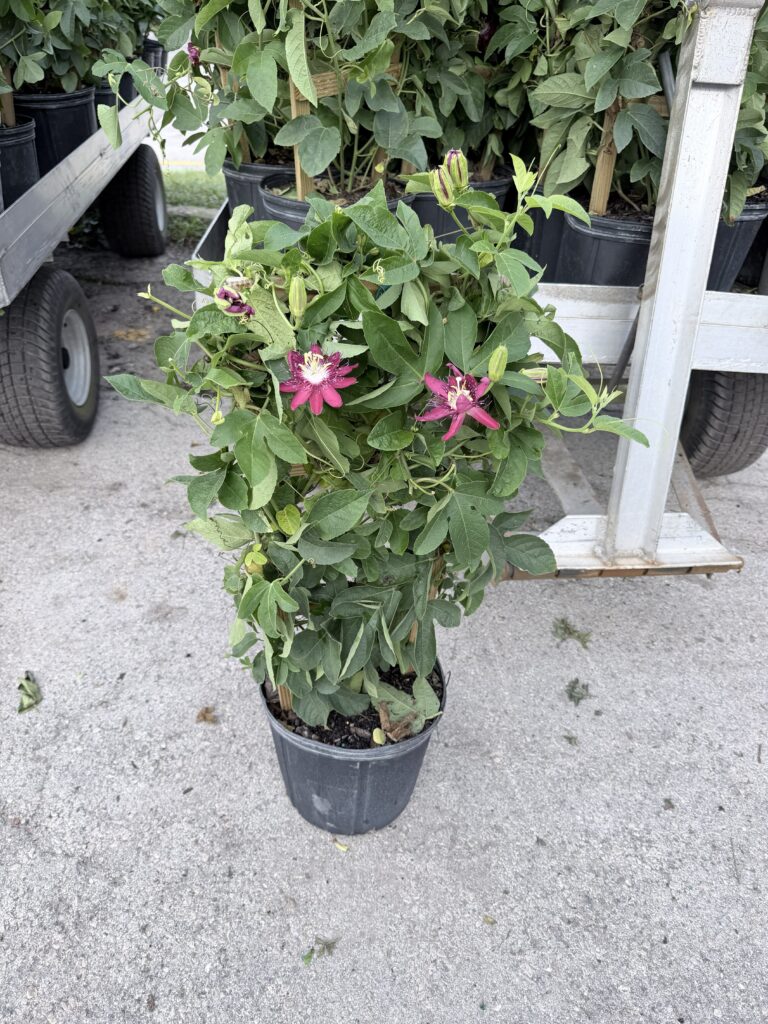
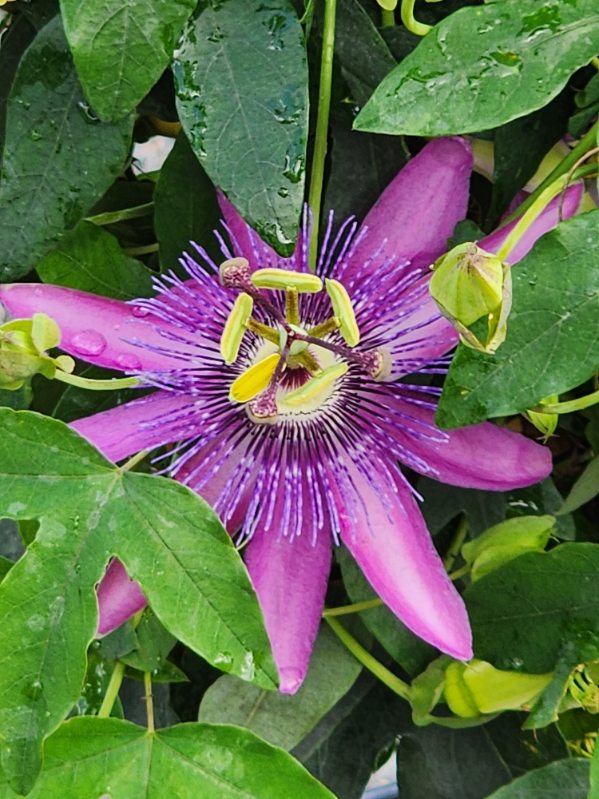
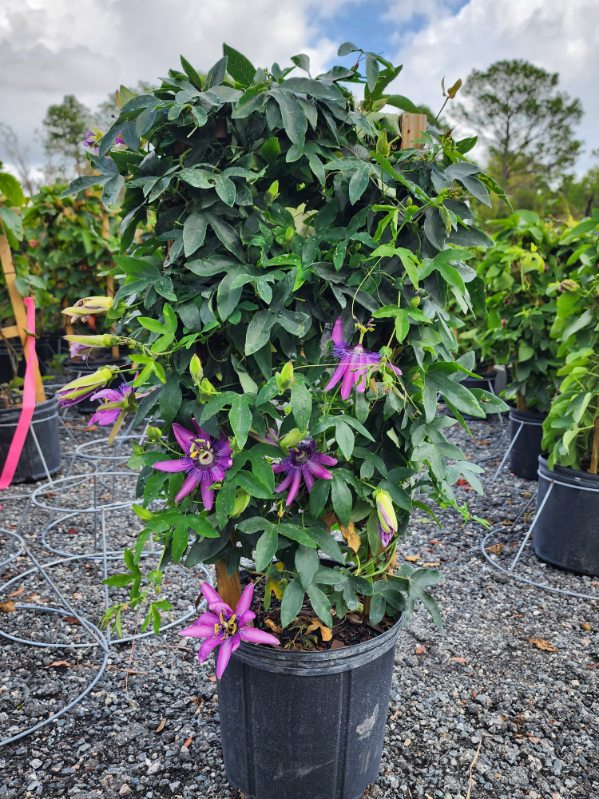
Passion flower vines are a stunning and fast-growing addition to any garden, known for their intricate blooms and ability to attract butterflies and pollinators. Well-suited to Florida’s warm, humid climate, these versatile vines can thrive with the right balance of sunlight, soil, and care. In this passion flower care guide, you’ll learn everything you need to know—from ideal soil pH and watering needs to pest management and growing tips—to keep your passiflora healthy, vibrant, and blooming throughout the season.
Climate & Temperature
- Ideal temperature: 65–85°F
- Thrives in central Florida’s subtropical climate
- Can tolerate heat well into the 90s with proper watering
- Cold sensitivity:
- Most tropical varieties struggle below 50°F
- Native varieties like Passiflora incarnata can survive brief cold snaps
Light Requirements
- Full sun = best flowering
- Minimum: 6+ hours of sunlight daily
- Can tolerate partial shade, but expect:
- Fewer blooms
- More vine growth
Morning sun + light afternoon shade can prevent leaf scorch in peak summer.
Soil Requirements
- Needs well-draining soil (critical in sandy FL soil)
- Ideal soil mix:
- Native sand + compost + organic matter
- Avoid:
- Heavy clay (waterlogging)
- Constantly wet soil (root rot risk)
Soil pH:
- Best range: 6.0 – 7.5 (slightly acidic to neutral)
- Tolerates mildly alkaline soil but performs best slightly acidic
Pro Tip– Amend planting hole with:
- Compost
- A little pine bark or peat (helps lower pH and retain moisture)
Watering Needs
- Establishment phase: deep watering 2–3x/week
- Once established:
- About 1–1.5 inches per week
- Drought tolerant, but:
- More water = more flowers & fruit
- Use mulch (2–3 inches) to:
- Retain moisture
- Keep roots cool
- Reduce weeds
Fertilizing
- Light but consistent feeding
- Use:
- Balanced fertilizer (10-10-10)
- OR low-nitrogen bloom fertilizer
Schedule:
- Start: early spring
- Continue: every 4–6 weeks through summer
Avoid high nitrogen → leads to lots of leaves, fewer flowers
Growth & Support
- Fast-growing vine (can reach 10–30+ feet)
- Needs:
- Trellis
- Fence
- Arbor
Expect aggressive growth in Florida—this plant can take over quickly
Pruning & Maintenance
- Prune hard in late winter or early spring
- During growing season:
- Light trimming to control spread
Pruning helps:
- Improve airflow (reduces pests/disease)
- Encourage new flowering growth
Pests & Problems
Good news: generally low-maintenance and pest-resistant
Common Issues:
- Caterpillars (especially Gulf fritillary butterflies)
- They will eat leaves
- Usually not harmful long-term
- Nematodes (soil issue in Florida)
- Occasional:
- Spider mites
- Aphids
Flowering & Pollination
- Blooms:
- Spring through fall in warmer zones
- Flowers last only 1 day, but new ones keep coming
- Attracts:
- Bees
- Butterflies
- Pollinators
For fruit production:
- Some varieties need cross-pollination
If you have any questions, feel free to reach out at (352) 735-8350.