
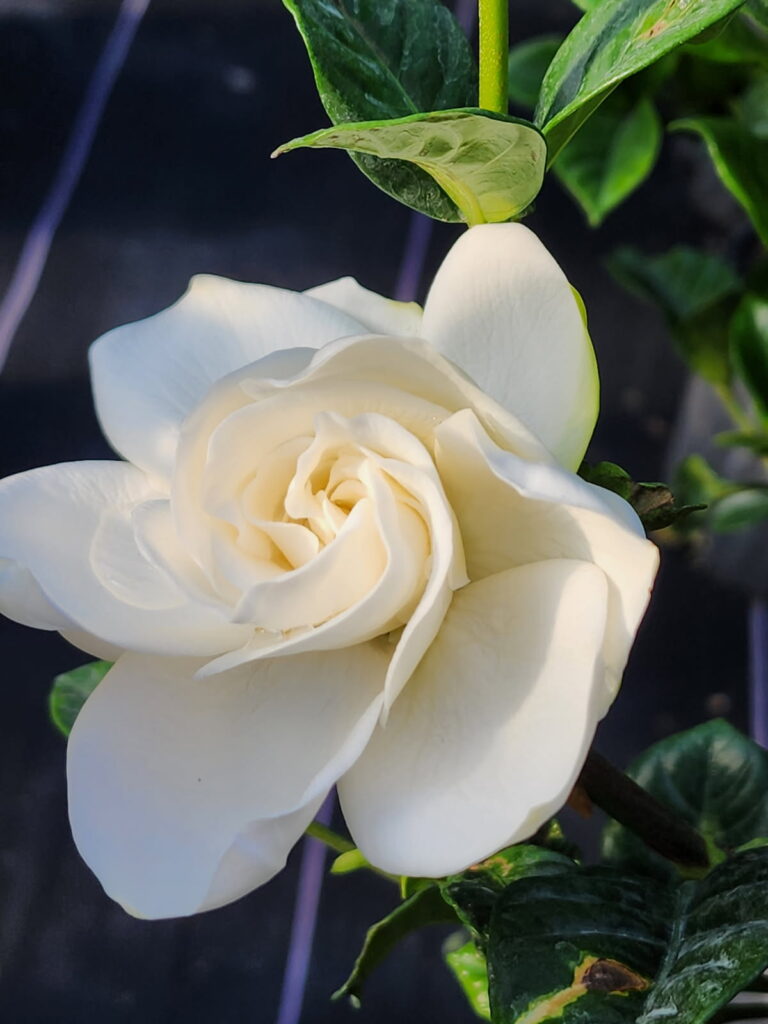
Gardenia jasminoides, commonly known as gardenia, is a beloved evergreen shrub known for its glossy green leaves and intensely fragrant white blooms. While stunning, gardenias have a reputation for being a bit particular, especially when it comes to soil and watering.
With the right care, however, gardenias can thrive and become a standout feature in your landscape or container garden.
We carry 10″ standard, 10″ braids, and 10″ hanging baskets. (Please call for availability.)
Light Requirements for Gardenias
Gardenias prefer bright light with some protection from harsh afternoon sun.
- Outdoors: Morning sun with afternoon shade is ideal
- Indoors: Bright, indirect light near a window
Too little light can reduce blooming, while too much direct sun can scorch leaves.
Temperature and Humidity Needs
Gardenias thrive in warm, humid environments with temperatures between 65 and 75 degrees Fahrenheit.
They are sensitive to sudden temperature changes and cold drafts. Gardenias can be grown outdoors but may need protection during occasional cold snaps.
Humidity is especially important for healthy growth. Low humidity can lead to bud drop or poor flowering.
Watering Gardenias Correctly
Consistent moisture is key when caring for gardenias.
- Keep soil evenly moist but not soggy
- Water when the top inch of soil begins to dry
- Avoid letting the plant fully dry out
Using distilled or rainwater can help prevent mineral buildup, which gardenias are sensitive to.
Soil Requirements and pH
Gardenias are acid-loving plants and require specific soil conditions to thrive.
- Ideal pH: 5.0 to 6.0
- Use well-draining, rich soil with organic matter
- Amend with peat moss or pine bark to maintain acidity
If the soil pH is too high, leaves may turn yellow due to nutrient deficiencies.
Fertilizing Gardenia Plants
Feed gardenias with an acid-forming fertilizer designed for azaleas or camellias.
- Fertilize every 4 to 6 weeks during the growing season
- Avoid over-fertilizing, which can damage roots
Look for fertilizers that contain iron to help maintain deep green foliage.
Pruning and Maintenance
Prune gardenias after they finish blooming to maintain shape and encourage new growth.
- Remove spent flowers to promote additional blooms
- Trim lightly to avoid cutting off future buds
Avoid heavy pruning late in the season, as this can reduce next year’s flowering.
Common Gardenia Problems
Gardenias can be sensitive to changes in their environment. Common issues include:
- Yellow leaves: Often caused by improper pH, overwatering, or nutrient deficiencies
- Bud drop: Triggered by inconsistent watering, low humidity, or temperature stress
- Pests: Aphids, whiteflies, and spider mites
Treat pests with neem oil or insecticidal soap and maintain consistent care routines.
Blooming and Fragrance
Gardenias are prized for their creamy white blooms and strong, sweet fragrance.
Most varieties bloom from late spring through summer, with some producing additional blooms throughout the season under ideal conditions.
Growing Gardenias in Containers
Gardenias grow well in containers, which allows for better control of soil conditions.
- Use a pot with excellent drainage
- Choose an acidic potting mix
- Monitor moisture levels closely
Container plants can be moved to protect from extreme weather or to optimize light exposure.
Winter Care for Gardenias
In milder climates, gardenias can remain outdoors year-round, but protection may be needed during cold spells.
- Cover plants during frost events
- Mulch around the base to protect roots
- Move container plants indoors or to a sheltered area if needed
Final Thoughts
Gardenias may require a bit more attention than some plants, but their beauty and fragrance make them well worth the effort. By maintaining proper soil acidity, consistent watering, and stable growing conditions, you can enjoy lush foliage and abundant blooms year after year.
If you have any questions, or would like to order, please call us at (352) 735-8350.