
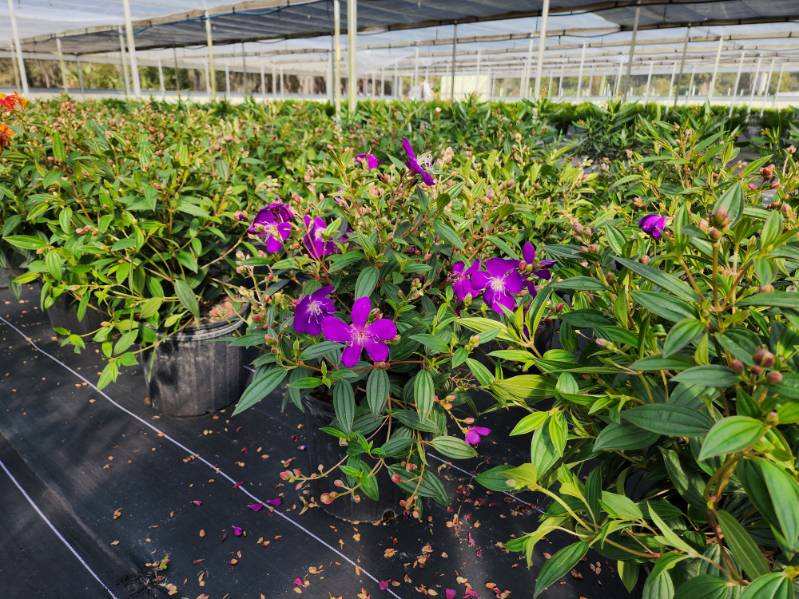
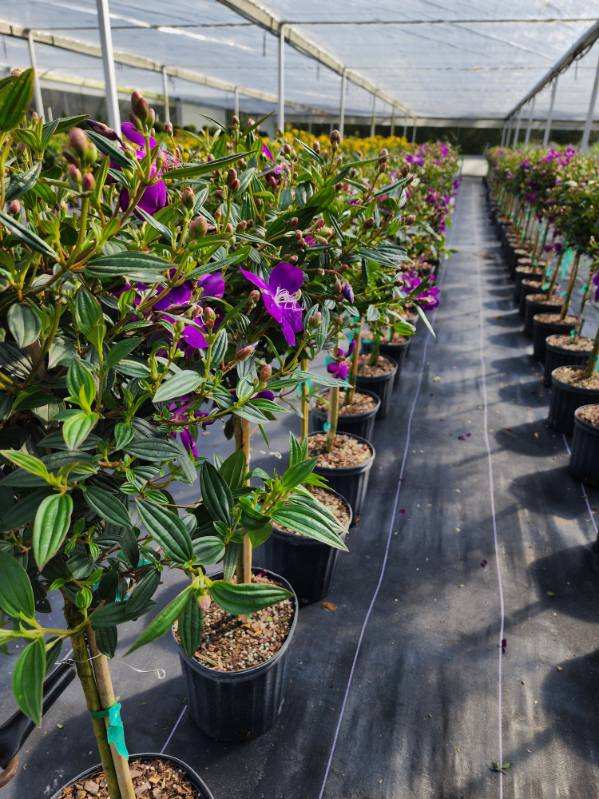
Tibouchina is a tropical ornamental shrub that belongs to the Melastomataceae plant family. It is widely known for its striking purple flowers and velvety foliage.
We carry 10″ tibouchina standards and bushes.
Common characteristics include:
- Large purple or violet blooms
- Soft, velvety green leaves with prominent veins
- Bushy growth habit
- Long blooming season in warm climates
Because of its bold color and tropical appearance, tibouchina is often used as a patio container plant, garden focal point, or ornamental shrub.
Sunlight Requirements
Tibouchina plants thrive in full sun to partial sun.
For best flowering results:
- Provide 6–8 hours of sunlight per day
- In extremely hot climates, light afternoon shade can help protect foliage
- Plants grown in heavy shade may produce fewer flowers
Container plants should be placed in bright patio areas with strong sunlight.
Watering Tibouchina
Tibouchina prefers consistent moisture, but it does not tolerate soggy soil.
Watering tips include:
- Water when the top inch of soil becomes dry
- During hot weather, container plants may need watering every day
- Avoid letting soil dry out completely
If the plant becomes too dry, it may drop leaves or flower buds.
Good drainage is essential to prevent root rot.
Soil and Container Needs
Tibouchina grows best in rich, slightly acidic, well-drained soil.
For container planting:
- Use a high-quality potting mix designed for flowering plants
- Choose a container with good drainage holes
- Add organic material such as compost to improve soil fertility
The plant benefits from soil that retains moisture while still draining well.
Fertilizing for Healthy Blooms
Tibouchina plants benefit from regular fertilizing during the growing season.
Recommended fertilizing schedule:
- Apply a balanced slow-release fertilizer in spring
- Supplement with liquid fertilizer every 3–4 weeks during summer
Fertilizing helps promote healthy foliage and continuous flowering.
Avoid excessive nitrogen fertilizers, which can encourage leafy growth instead of blooms.
Pruning and Shaping
Pruning helps maintain a compact, bushy shape and encourages new growth.
Pruning tips:
- Lightly trim stems after flowering
- Remove dead or damaged branches
- Pinch back growing tips to encourage branching
Regular pruning keeps tibouchina plants looking full and healthy.
Temperature and Climate Needs
Tibouchina plants prefer warm tropical and subtropical climates.
Ideal conditions include:
- Temperatures between 65°F and 85°F
- Protection from strong winds
- No exposure to frost
Because tibouchina is sensitive to cold temperatures, it is often grown as a container plant in cooler regions.
Overwintering Tibouchina
Gardeners in cooler climates can bring tibouchina indoors for the winter.
Steps for overwintering:
- Move plants indoors before temperatures drop below 50°F.
- Place in a bright sunny window.
- Reduce watering slightly during winter dormancy.
- Resume fertilizing in early spring.
Some leaf drop may occur when transitioning plants indoors.
Common Pests and Problems
Like many tropical plants, tibouchina may occasionally attract pests.
Common pests include:
- Aphids
- Spider mites
- Whiteflies
These pests can typically be controlled with insecticidal soap or neem oil.
Healthy plants grown in good sunlight with proper watering are less likely to develop pest issues.
Why Gardeners Love Tibouchina
Tibouchina is a favorite among gardeners because it provides:
- Bold, dramatic purple flowers
- A tropical look for patios and gardens
- A long blooming season in warm weather
- Beautiful foliage that adds texture to landscapes
A 10″ tibouchina bush or standard can quickly grow into a lush ornamental plant that becomes a stunning focal point in outdoor spaces.
If you have any questions, feel free to call us at (352) 735-8350.