

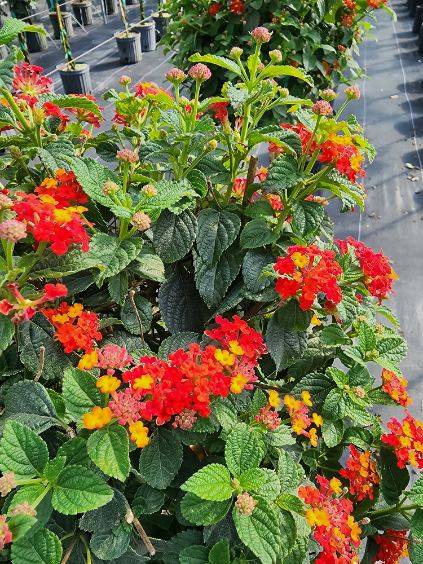

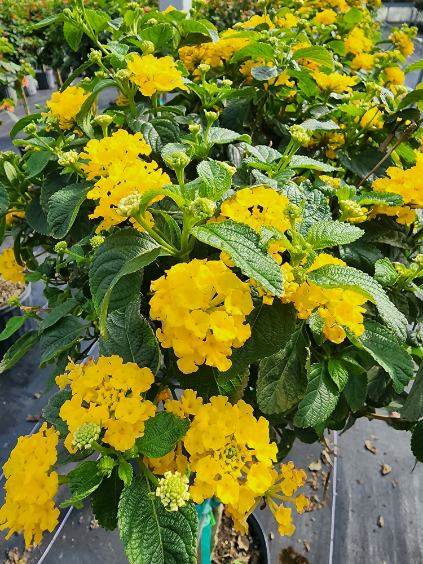


Lantana is a heat-loving flowering plant known for its vibrant clusters of blooms and exceptional durability in hot weather. When grown as a standard (tree form), lantana becomes an elegant ornamental plant with a single trunk and a rounded canopy of flowers.
We carry 10″ Red, yellow, and confetti lantana standards which are especially popular for patios, entryways, containers, and landscape accents, offering bright color and attracting butterflies and pollinators throughout the warm months.
Below is a complete guide to help gardeners keep their lantana standards healthy, full, and blooming all season.
What Is a Lantana Standard?
A lantana standard is simply a lantana plant that has been trained into a small tree form rather than a spreading shrub.
Characteristics include:
- A single central trunk
- A rounded canopy of foliage and flowers
- Continuous clusters of small blooms
- Compact ornamental size ideal for containers
Because of this unique shape, lantana standards are commonly used as patio focal points or decorative container plants.
Sunlight Requirements
Lantana plants thrive in full sun and require plenty of direct sunlight to bloom heavily.
For best results:
- Provide 6–8 hours of direct sunlight daily
- Place container plants in the sunniest area of your patio or garden
- Avoid planting in heavy shade, which can reduce flowering
These plants actually perform better in heat and bright sun, making them perfect for summer landscapes.
Watering Lantana Standards
Lantana is known for being drought tolerant once established, but container plants require regular watering.
Watering guidelines:
- Water when the top 1–2 inches of soil become dry
- During extreme heat, container plants may need watering daily
- In landscape beds, watering once or twice per week is usually sufficient
The most important rule is good drainage. Lantana roots do not tolerate constantly wet soil.
Soil and Container Requirements
Lantana standards grow best in well-drained soil. In fact, slightly lean soil conditions often encourage better flowering.
For container planting:
- Use a high-quality potting mix
- Ensure containers have drainage holes
- Choose a container large enough to support the canopy and prevent tipping
Heavy ceramic or decorative patio pots work especially well for lantana standards.
Fertilizing Lantana Plants
Lantana plants are moderate feeders and benefit from occasional fertilization.
Recommended feeding schedule:
- Apply a balanced slow-release fertilizer in spring
- Supplement with liquid fertilizer every 3–4 weeks during summer
Avoid fertilizers high in nitrogen, which may promote foliage growth instead of flowers.
Proper fertilizing helps maintain continuous blooms and healthy foliage.
Pruning and Shaping Lantana Standards
Pruning is essential for maintaining the attractive tree shape of lantana standards.
Pruning tips include:
- Lightly trim the canopy to keep it rounded
- Remove dead or weak stems regularly
- Pinch back new growth to encourage branching
Because lantana blooms on new growth, pruning can actually stimulate additional flowering.
If the canopy becomes too large, a moderate trim will help maintain a balanced shape.
Temperature and Climate
Lantana thrives in warm climates and high temperatures.
Ideal growing conditions include:
- Temperatures between 65°F and 95°F
- Full sun exposure
- Good air circulation
In warm regions such as the southern United States, lantana can sometimes behave as a perennial shrub. In cooler climates, it is typically grown as an annual or container plant.
Overwintering Lantana Standards
Because lantana is sensitive to frost, gardeners in cooler climates may need to protect plants during winter.
Options include:
- Bringing container plants indoors before the first frost
- Placing them in a bright, sunny window
- Reducing watering during winter dormancy
In some climates, lantana may drop leaves during winter but regrow when temperatures warm.
Attracting Pollinators
One of the biggest benefits of lantana plants is their ability to attract pollinators.
Lantana flowers are known to attract:
- Butterflies
- Bees
- Hummingbirds
The confetti variety, with its multi-colored blooms, is especially attractive to pollinators.
Why Gardeners Love Lantana Standards
Lantana standards are extremely popular because they provide:
- Bright, long-lasting summer color
- A unique small-tree shape for containers
- Exceptional heat and drought tolerance
- Strong pollinator attraction
Whether grown in red, yellow, or confetti varieties, lantana standards offer vibrant blooms and low-maintenance beauty for patios, porches, and garden landscapes.
If you have any questions, feel free to call us at (352) 735-8350.