
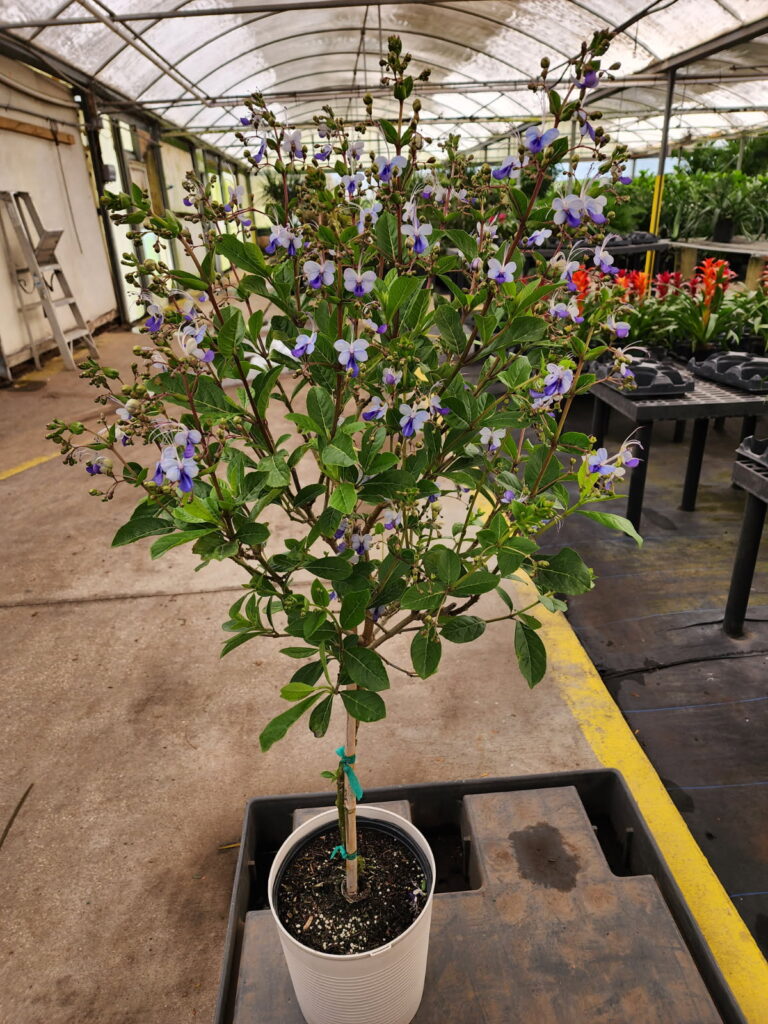
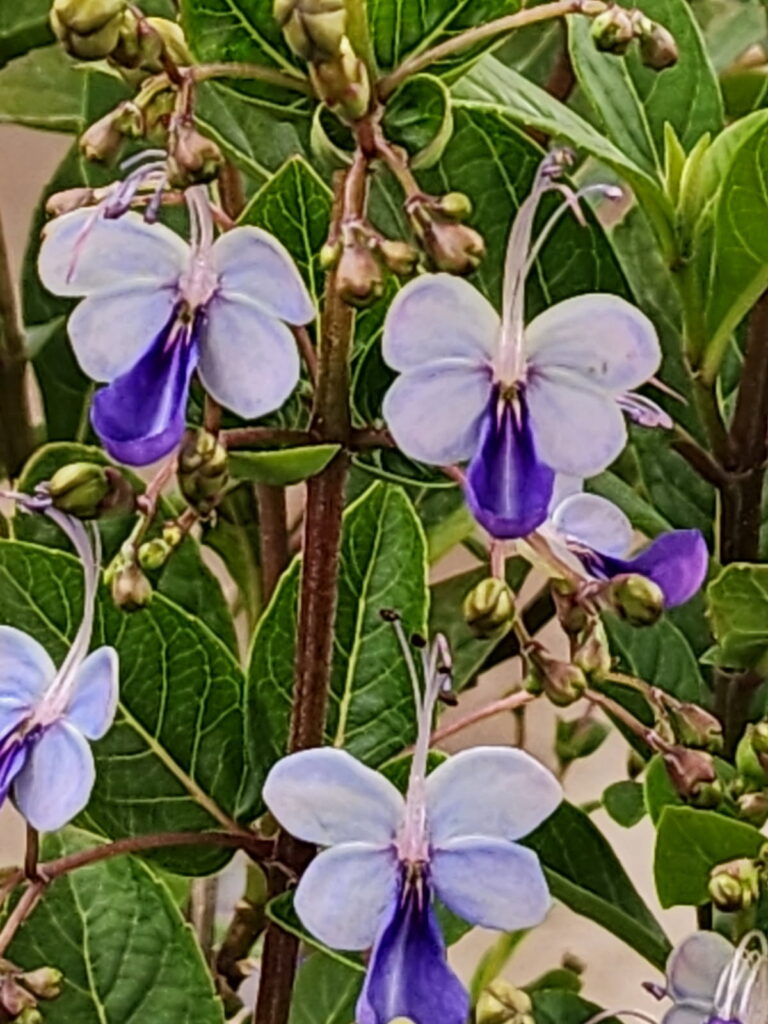
The Clerodendrum ugandense, commonly known as the Blue Butterfly Tree or Blue Butterfly Bush, is a tropical flowering plant prized for its unique blue flowers that resemble fluttering butterflies. These delicate blooms feature soft blue petals with darker blue and purple accents, creating a striking and whimsical display.
A 10″ potted blue butterfly tree makes a beautiful addition to patios, porches, and garden beds, especially for gardeners looking to attract pollinators and add a soft, airy texture to their space.
What Is a Blue Butterfly Tree?
The Blue Butterfly Tree is a fast-growing tropical shrub that can be grown as a bush or trained into a small tree form.
Key features include:
- Butterfly-shaped blue flowers
- Light, airy branching structure
- Long blooming season in warm weather
- Strong attraction to butterflies and pollinators
This plant is often used in pollinator gardens, container plantings, and tropical landscapes.
Sunlight Requirements
Blue Butterfly Trees thrive in full sun to partial sun.
For best flowering:
- Provide 6+ hours of sunlight daily
- Morning sun with light afternoon shade works well in hotter climates
- More sun typically results in more blooms
Plants grown in too much shade may become leggy and produce fewer flowers.
Watering Blue Butterfly Plants
This plant prefers consistent moisture with good drainage.
Watering guidelines:
- Water when the top inch of soil becomes dry
- Keep soil evenly moist but not soggy
- Container plants may require watering several times per week in summer
Avoid allowing the plant to dry out completely, as this can reduce flowering.
Soil and Growing Conditions
Blue Butterfly Trees grow best in well-drained, moderately fertile soil.
For container planting:
- Use a high-quality potting mix
- Ensure pots have drainage holes
- Add compost or organic matter for improved soil health
Good drainage is key to preventing root issues.
Fertilizing for Healthy Blooms
Regular feeding helps support continuous flowering.
Recommended fertilizing schedule:
- Apply a balanced fertilizer every 3–4 weeks during the growing season
- Use a fertilizer formulated for flowering plants
Avoid over-fertilizing, which can reduce blooms.
Pruning and Shaping
Pruning helps maintain a compact, attractive shape and encourages new blooms.
Pruning tips:
- Trim lightly to shape the plant
- Remove leggy or weak growth
- Prune in early spring to encourage fuller growth
Because the plant blooms on new growth, pruning can help increase flower production.
Temperature and Climate
Blue Butterfly Trees prefer warm, tropical to subtropical climates.
Ideal conditions include:
- Temperatures between 65°F and 90°F
- Protection from strong winds
- No exposure to frost
In cooler climates, they are often grown as container plants or seasonal annuals.
Overwintering Blue Butterfly Trees
In areas with colder winters, plants should be brought indoors.
Steps for overwintering:
- Move indoors before temperatures drop below 50°F
- Place in a bright sunny window
- Reduce watering during winter dormancy
- Resume fertilizing in spring
Some leaf drop is normal during the transition.
Pollinator Benefits
One of the biggest benefits of this plant is its ability to attract pollinators.
Blue Butterfly Trees attract:
- Butterflies
- Bees
- Beneficial insects
This makes them an excellent choice for pollinator-friendly gardens.
Why Gardeners Love Blue Butterfly Trees
Gardeners love this plant because it offers:
- Unique butterfly-shaped blue flowers
- Long blooming season
- Light, airy growth habit
- Strong pollinator attraction
A 10″ blue butterfly tree is a beautiful and unique addition to any patio or garden, bringing both color and movement to outdoor spaces.
As always, if you have any questions, feel free to call us at (352) 735-8350.