
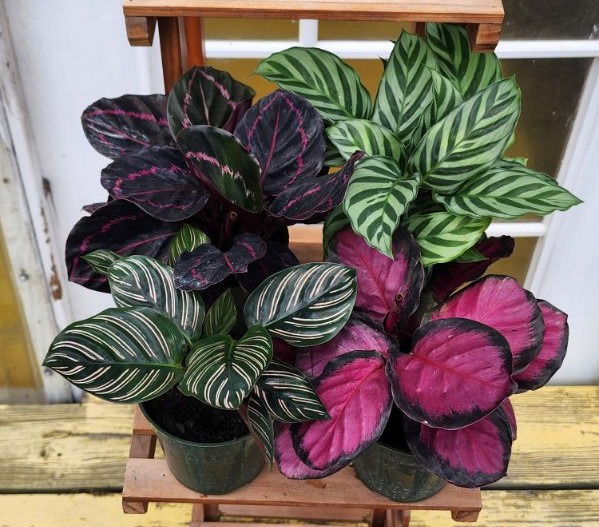
Calathea plants—often called prayer plants due to their leaf movement—are known for their stunning patterns, velvety textures, and vibrant colors. Though they are considered slightly finicky, with the right care they can thrive and become one of the most eye-catching additions to your indoor plant collection. Here’s everything you need to know to keep your Calathea happy and healthy.
Light Requirements
Calatheas are native to tropical forest floors, which means they thrive in bright, indirect light.
- Too much direct sunlight can cause leaf fading or crispy edges.
- They tolerate lower light, but growth may slow.
- Place near a window with filtered light or in a well-lit room away from harsh sun.
Watering
Calatheas are moisture-loving but sensitive to water quality.
- Keep soil consistently moist but not soggy.
- Water when the top inch of soil feels dry.
- Use filtered, distilled, or rainwater to prevent mineral buildup and leaf browning.
- Reduce watering slightly during winter.
If edges turn crispy or brown, water quality or humidity is usually the cause.
Humidity Needs
Calatheas love humidity—think tropical rainforest conditions.
- Ideal humidity: 50–70%.
- Use a humidifier, pebble tray, or group plants together to boost moisture.
- Avoid cold drafts or dry air from heating vents.
High humidity helps keep leaves lush and prevents curling.
Temperature
Keep your Calathea warm and comfortable:
- Ideal temperature: 65–80°F
- Avoid temperatures below 60°F
- Consistent conditions are best—Calatheas dislike sudden changes.
Soil & Potting
Calatheas prefer rich, airy, well-draining soil.
- Use a mix of peat-free potting soil + perlite + coco coir for moisture balance.
- Repot every 1–2 years to refresh soil and allow room for root growth.
- Always choose pots with drainage holes.
Fertilizing
Feed lightly during the growing season.
- Use a balanced, diluted houseplant fertilizer once a month in spring and summer.
- Avoid fertilizing in winter when growth slows.
Too much fertilizer can lead to leaf burn.
Common Issues
- Leaf Curling. Usually caused by underwatering or low humidity.
- Brown Leaf Edges. Often due to hard water, low humidity, or overexposure to light.
- Yellow Leaves. Can signal overwatering or poor drainage.
- Pests. Watch for spider mites—Calatheas are prone to them in dry environments. Increase humidity and treat with neem oil if necessary.
Why Calatheas Make Great Houseplants
- Beautiful foliage with striking patterns
- Non-toxic to pets
- Great for adding a tropical, lush feel to any space
- Provide visual interest with their nighttime leaf movement