
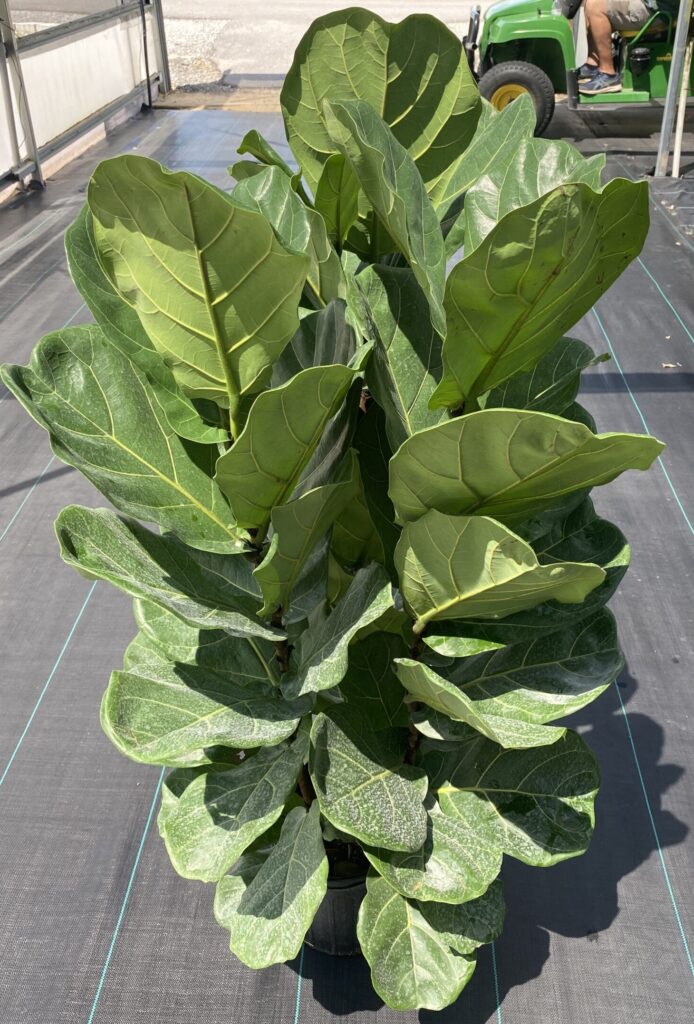
The Ficus lyrata Bush, often called the Fiddle Leaf Fig, is known for its lush, violin-shaped leaves and upright growth. This statement plant brings a tropical, modern look to any indoor space but needs consistent care to thrive.
Light
- Prefers bright, indirect light for at least 6–8 hours daily.
- Can adapt to some direct morning sun but avoid harsh afternoon rays.
- Low light causes leaf drop and poor growth.
Watering
- Water when the top 2–3 inches of soil feel dry.
- Water thoroughly until it drains from the bottom; discard excess water.
- Avoid letting the soil stay soggy—this causes root rot.
- In winter, water less frequently as growth slows.
Temperature & Humidity
- Best range: 65–80°F (18–27°C).
- Keep away from drafts, AC vents, and heaters.
- Enjoys higher humidity—consider a humidifier or pebble tray if air is dry.
Soil & Fertilizer
- Use a well-draining potting mix with peat, pine bark, and perlite.
- Fertilize monthly in spring and summer with a balanced, water-soluble fertilizer.
- Pause feeding in fall and winter.
Maintenance & Pruning
- Dust leaves regularly with a damp cloth to help with photosynthesis.
- Prune to maintain shape and encourage fuller growth.
- Rotate the pot occasionally so the plant grows evenly.
Repotting
- Repot every 1–2 years or when roots outgrow the pot.
- Choose a pot with drainage holes, 2–3 inches larger than the old one.
Common Issues
- Brown edges: often from inconsistent watering or low humidity.
- Yellow leaves: usually overwatering.
- Leaf drop: sudden environmental changes (light, water, or drafts).
- Watch for spider mites, mealybugs, and scale—treat with neem oil or insecticidal soap.
Safety
- Fiddle Leaf Fig is toxic to pets and people if ingested. Keep out of reach of cats, dogs, and children.
✅ The Ficus lyrata Bush makes a bold, stylish statement indoors when given bright light, consistent watering, and a little extra attention.