
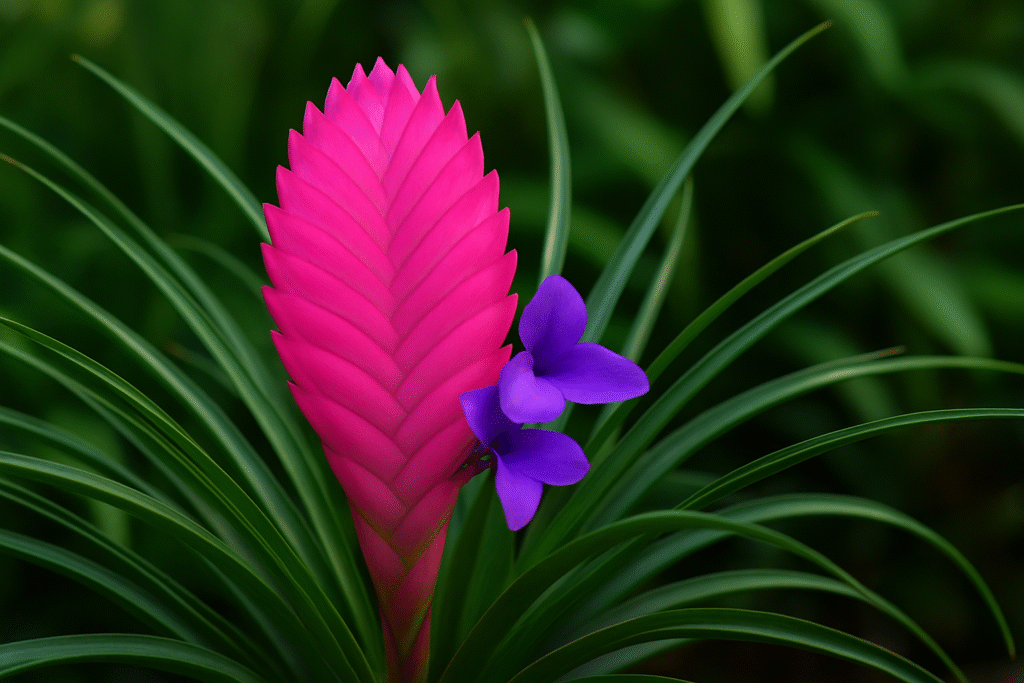
If you’re looking to add a vibrant, low-maintenance plant to your indoor collection, the Pink Quill plant (Wallisia cyanea) is a top contender. Known for its vivid pink bract—shaped like a feather or “quill”—and delicate purple flowers, this bromeliad is as beautiful as it is easy to care for. Native to Ecuador, Wallisia cyanea thrives indoors and brings a splash of color with minimal effort.
Here’s everything you need to know to keep your Pink Quill happy and healthy.
Quick Facts:
- Common name: Pink Quill Plant
- Botanical name: Wallisia cyanea
- Family: Bromeliaceae
- Light: Bright, indirect light
- Water: Moderate; likes humidity
- Bloom time: Usually once, lasting 1–3 months
- Toxicity: Non-toxic to pets
Light Requirements
The Pink Quill plant thrives in bright, indirect sunlight. Place it near a window with filtered light or in a bright room where it gets plenty of natural light without harsh rays that can scorch its leaves. If it’s not getting enough light, the plant may become leggy and the color of the bract may fade.
💡 Tip: Avoid placing it in full sun, especially behind hot south-facing windows.
Watering and Humidity
Wallisia cyanea is part of the bromeliad family, which means it absorbs moisture through both its roots and its central “tank” or cup formed by the rosette of leaves.
- Water the soil lightly once the top inch feels dry. Avoid soggy soil—bromeliads hate wet feet.
- Mist the leaves and central cup once or twice a week, especially in dry indoor environments.
- Humidity: Prefers 50% or higher. Use a pebble tray or humidifier if your air is dry.
🚫 Avoid using hard water. Distilled or rainwater is best to prevent mineral buildup.
Soil and Potting
Pink Quill does best in a well-draining, airy mix—orchid bark or a bromeliad-specific potting mix works well. You can also mix regular potting soil with perlite and bark for extra drainage.
Use a small pot with drainage holes. These plants like to be somewhat root-bound, so no need to upsize frequently.
Flowering and Lifecycle
The pink “quill” is actually a bract, which lasts for several weeks to months and slowly fades over time. The true flowers are small and violet-blue, emerging from the bract.
Wallisia cyanea typically blooms once in its lifetime, but after flowering, it produces offsets (pups) at the base.
- Once the parent plant starts to decline, pups can be separated and potted once they reach about one-third the size of the parent.
- These pups will eventually bloom, continuing the cycle.
Temperature and Environment
- Ideal temperature: 65–80°F (18–27°C)
- Avoid cold drafts or temps below 50°F (10°C)
- Great for indoor climates; can go outdoors in warm, humid summers (but keep it shaded).
Common Issues
- Brown tips: Usually from low humidity or underwatering
- Yellowing leaves: May indicate overwatering or poor drainage
- No blooms: Needs more light or is still too young
- Pests: Rare, but watch for mealybugs or scale—wipe with alcohol-dipped cotton swabs or use neem oil.
Fun Facts
- The Pink Quill is named for its unique bloom shape, resembling a feather quill pen.
- It belongs to the Tillandsia genus, which includes many air plants.
- It’s an epiphyte in the wild—meaning it naturally grows on trees, absorbing moisture from the air.
Final Thoughts
The Pink Quill plant is an elegant and unique houseplant that’s easy to love and easy to grow. With just the right amount of light, moisture, and care, it can brighten your home for months. Even after blooming, the plant rewards your patience with new growth in the form of pups—making it a gift that keeps on giving.
Whether you’re a seasoned plant parent or a beginner looking for an eye-catching addition, Wallisia cyanea is sure to impress.
Our hours are Monday-Friday 8-4 p.m. If you have any questions, or are interested in purchasing Pink Quill Bromeliad plants, feel free to call us at (352) 735-8350. You can also view our inventory list here. If you’re looking for something not listed, please give us a call!